WhatsApp Chat

   Try our eLearning Authoring Tool     Get Started Free

Blended Learning: Types, Benefits, and Real-Life Examples (2026)

Blended Learning

Blended learning platforms are tools that combine online learning with instructor-led training to create a flexible and engaging learning experience. This evolving blended learning approach helps organizations balance flexibility with real-time interaction.

As organizations and educators move beyond traditional training methods, these platforms play a crucial role in delivering scalable, personalized, and interactive learning.

In this guide, you’ll explore how blended learning works, its key benefits, and the best LMS platforms to consider in 2026.

What Is Blended Learning?

Blended learning, also known as hybrid learning, integrates face-to-face instruction with digital learning tools and resources. This approach leverages the strengths of both traditional and online learning environments, offering flexibility, personalization, and a more engaging educational experience. Unlike fully online learning, blended learning retains the human interaction of in-person teaching while incorporating the convenience of digital technologies.

What are the types of Blended Learning

Blended learning comes in various forms, each tailored to specific learning goals and contexts through different blended learning models.

1. Flipped Classroom

In the flipped classroom model, students review instructional content, such as videos or reading materials, at home before engaging in collaborative and hands-on activities in the classroom. This approach shifts the focus from passive listening to active participation.

Example: A high school physics teacher assigns video lectures as homework and uses classroom time for problem-solving and experiments.

2. Enriched Virtual Model

This model primarily relies on online learning, supplemented by occasional face-to-face interactions. It is particularly effective for self-directed learners who can manage their time and resources efficiently.

Example: Corporate training programs where employees complete e-learning modules and attend quarterly in-person workshops.

3. Rotation Model

Students rotate between different learning stations, which may include teacher-led instruction, group work, and online activities. This model ensures that students experience multiple methods of content delivery.

Example: In a language learning class, students alternate between using language apps, practicing speaking in small groups, and receiving direct instruction from the teacher.

4. Flex Model

In this model, most learning happens online, with teachers providing support as needed. The flex model is particularly suited for students requiring individualized attention.

Example: A university offering a hybrid degree program where students complete coursework online but have access to professors during office hours.

5. Lab Rotation Model

Students rotate between classroom learning and a computer lab where they engage with online resources. This model is ideal for integrating technology into traditional teaching environments.

Example: Elementary schools using lab rotations to teach coding alongside regular math and science lessons.

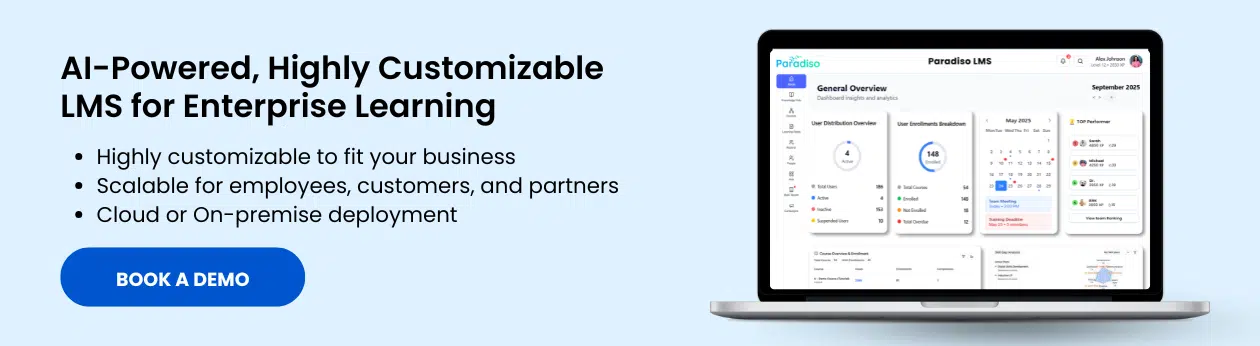
🚀 Ready to See Paradiso LMS in Action?

Let’s show you how Paradiso LMS can work for you.

🎯 Book a Demo

What are the benefits of Blended Learning

Blended learning offers numerous advantages for learners, educators, and organizations, especially when supported by well-defined blended learning strategies.

  • 1. Personalized Learning: Blended learning allows educators to tailor instruction to meet individual learning needs. Students can progress at their own pace, revisiting materials as needed.
  • 2. Flexibility: Learners have the freedom to access digital resources anytime, anywhere. This flexibility is especially beneficial for working professionals and students with diverse schedules.
  • 3. Enhanced Engagement: By incorporating multimedia, interactive tools, and real-world applications, blended learning keeps students actively engaged. The combination of online and in-person elements caters to different learning styles.
  • 4. Improved Outcomes: Studies show that blended learning often leads to better retention rates and academic performance compared to traditional methods. The integration of technology enables data-driven insights, helping educators identify and address learning gaps.
  • 5. Cost Efficiency: For organizations, blended learning reduces costs associated with travel, printed materials, and physical infrastructure. Digital tools provide scalable solutions for training large groups.
  • 6. Fostering Lifelong Learning: Blended learning promotes self-directed learning habits, encouraging students to take ownership of their education—a critical skill for lifelong success.

Real-Life Examples of Blended Learning in Action

1. Higher Education

Universities worldwide are adopting blended learning to enhance the student experience. For instance, Arizona State University’s Global Freshman Academy combines online courses with optional in-person sessions, making higher education accessible to students from diverse backgrounds.

2. Corporate Training

Leading organizations like Deloitte and Google utilize blended learning for employee development. Deloitte’s leadership programs integrate online modules with on-site workshops, ensuring participants gain both theoretical knowledge and practical skills.

3. K-12 Education

Blended learning is transforming K-12 classrooms. For example, the Miami-Dade County Public Schools implemented the flipped classroom model to improve student performance in STEM subjects. Students watch instructional videos at home and participate in hands-on projects during class.

4. Healthcare Training

Healthcare professionals benefit from blended learning through simulations and online coursework. The Mayo Clinic, for example, uses virtual reality and online modules alongside clinical practice to train medical students and staff.

5. Vocational Training

Trade schools and vocational training programs are leveraging blended learning to prepare students for industry-specific roles. Platforms like Skillshare and Coursera offer courses that blend video tutorials with practical assignments.

Considerations for Using Blended Learning Techniques

Blended learning provides a flexible and efficient approach to education by fusing traditional in-person instruction with online learning components. While putting blended learning strategies into practice, there are a few things to remember:

Schedule

Since certain blended learning techniques are synchronous, participants must ensure they are always present. In contrast, users of asynchronous blended learning approaches are not required to follow a set schedule.

Control

To provide comprehensive explanations of difficult subjects, instructor-led learning is necessary. However, self-paced blended learning enables students to continue with the course material at their own pace and convenience.

Participation

Group work is a major component of some blended learning and training approaches. As such, each member must actively participate. Conversely, there exist certain techniques that emphasize the unique involvement of users.

Technology

Having access to the most recent technologies and equipment is crucial to fully using the many benefits of blended learning. E‑books, lag‑free internet access, graphical and visual assistance, and other things could fall under this category.

Flexibility and Adaptability

Be ready to modify the ratio of in-person to online training in response to student requirements, feedback, and the learning goals of each session or unit.

Data Gathering and Analysis

Track student development and participation in online activities with the help of data analytics, which enables prompt intervention and individualized support as needed.

Inclusivity and Accessibility

Make sure that all students, including those with disabilities, can access online resources and activities, and that accommodation is made as needed.

Advantages and Disadvantages of Blended Learning

Blended learning has several benefits and drawbacks. To mitigate issues and optimize gains, blended learning necessitates meticulous preparation, execution, and continuous assessment.

Advantages Disadvantages
Flexibility: Allows for flexibility in learning pace and location, accommodating different learning styles and schedules. Technical Challenges: Requires access to technology and reliable internet connectivity, which may be lacking in some areas or for some students.
Personalization: Enables personalized learning experiences through online assessments, adaptive learning software, and targeted interventions. Implementation Complexity: Requires careful planning and coordination between online and face-to-face components and training educators in technology effectively.
Engagement: Engages students with interactive online content, multimedia resources, and collaborative activities, enhancing motivation and participation. Digital Divide: Widens the divide between privileged and marginalized students by exacerbating disparities in access to technology and digital literacy abilities.
Cost-Effectiveness: Reduces costs associated with traditional classroom-based instruction, such as travel expenses, printing materials, and facility maintenance. Resistance to Change: May face resistance from educators or students accustomed to traditional teaching methods, requiring buy-in and support from all stakeholders.
Accessibility: Increases accessibility for learners with disabilities through assistive technologies and accommodations for diverse learning needs. Loss of Human Connection: Diminishes face-to-face interactions and socialization opportunities, which are important for building relationships and a sense of community among students and educators.

Benefits of Using Paradiso LMS for Blended Learning

The Paradiso Learning Management System boasts outstanding features that provide users endless learning opportunities. The following are some of the advantages that users of Paradiso LMS can take advantage of:

Adaptability

Instructors can effectively handle the materials with Paradiso LMS. Students can experiment with different learning modalities at their own speed by utilizing the blended learning feature.

Integration

Paradiso LMS provides an additional blended learning capability that enables users to combine several instructional modalities from various viewpoints. It is a feature that many users find appealing.

Excellent Training

Teachers can have more one‑on‑one interactions with students by using the Paradiso LMS. They can travel between the stations or activities to engage with a single child or a small group of students and monitor their development.

Focus

The Paradiso LMS’s blended learning feature enables instructors to concentrate on training modules and give extra assistance to students who might need it. Teachers can better address the ability gaps of their students by focusing on their education thanks to the data that the Paradiso LMS’s advanced report function provides.

Engagement

Students are constantly surrounded by technology in today’s classrooms. They consequently frequently interact with content that is enhanced by cutting‑edge technological capabilities. With the outstanding blended learning resources offered by Paradiso LMS, students can increase their technical proficiency and skill set.

Personalized Training

Students can create a blended learning pathway that suits them best with the help of Paradiso LMS. Moreover, it enables educators to gauge the advancement of every pupil. As a result, educators can take corrective action to guarantee that students receive the best learning resources possible.

The Future of Blended Learning

Blended learning is not just a trend; it is a paradigm shift in education and training. As technology continues to evolve, the possibilities for personalization, engagement, and scalability will expand. Emerging technologies like artificial intelligence (AI), augmented reality (AR), and virtual reality (VR) are set to enhance the blended learning experience further.

For educators and organizations, now is the time to embrace this transformative approach. By understanding the types, benefits, and real-world applications of blended learning, you can create impactful learning experiences that meet the needs of today’s diverse learners.

Blended learning is reshaping education and training across the globe. Whether you are a teacher, a corporate trainer, or a lifelong learner, this hybrid approach offers unparalleled opportunities for growth, flexibility, and innovation. Start your blended learning journey today and unlock the full potential of this powerful instructional model.

Conclusion

Blended learning has transformed how organizations and educators deliver training by combining the best of traditional instruction and modern digital tools. From flexible learning models to improved engagement and measurable outcomes, it offers a powerful approach to meet today’s evolving learning needs.

However, successfully implementing blended learning requires the right technology. A robust LMS platform helps streamline content delivery, track learner progress, and create a seamless learning experience.

If you’re looking to implement or scale blended learning effectively, choosing the right platform is key. Explore how Paradiso LMS can help you deliver engaging, flexible, and results-driven training programs.

Frequently Asked Questions About Blended Learning

1. How is blended learning different from traditional classroom training?

Blended learning combines in-person instruction with digital learning components, offering greater flexibility and personalization compared to traditional classroom-only models.

2. Is blended learning suitable for corporate training environments?

Yes. Many organizations use blended learning to balance instructor-led sessions with self-paced digital modules. Platforms like Paradiso LMS help structure and manage blended programs efficiently.

3. Can blended learning improve employee engagement?

Yes. By mixing formats such as live sessions, eLearning modules, and interactive activities, blended learning keeps learners more engaged than single-format training.

4. What technologies are required to implement blended learning?

An LMS, virtual classroom tools, content management systems, and collaboration platforms are commonly used. Solutions such as Paradiso LMS integrate these tools into a unified system.

5. How can organizations measure the success of blended learning programs?

Success can be tracked through course completion rates, assessment results, engagement metrics, and performance improvements using LMS analytics.

Follow us!

Do NOT follow this link or you will be banned from the site!